
Because of the pandemic, most of us needed to start working from home, almost from one day to another. Companies overall adjusted really well to this new reality and shifted to online meetings. But we were too dependent on the face-to-face meetings, and these don't translate directly to online meetings, so we need to make an effort to optimize them to avoid everyone losing their time.
Today I want to focus on important things that are unique to online meetings, and you should consider them so that they are as most productive as possible.
"You're on mute"
"You're on mute" is the most said sentence of the last few years by far. Since we transitioned to working from home, we have less control of our surroundings. Kids, cars outside, construction, or any other noise that is not usual in the office can disturb many meetings. So it's good that people mute themselves when they are not talking.
Microsoft Teams does help us a little these days. If it detects that you're speaking while muted, it pops up a "You're muted" notification. It won't unmute you, so you still have to do something about it, but at least we now have a machine doing the reminding instead of a colleague.
There's a way for you to mute everyone, but it goes without saying that you should be respectful. Don't be a jerk and mute everyone so that you can talk.
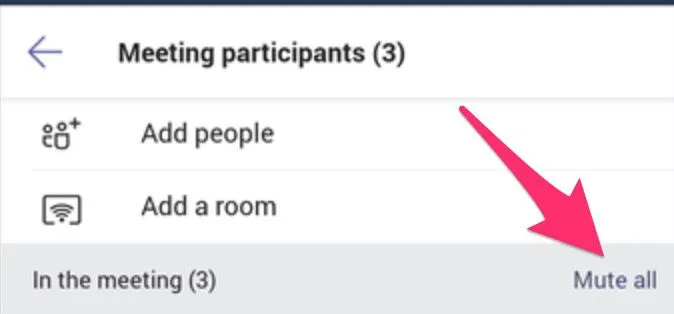
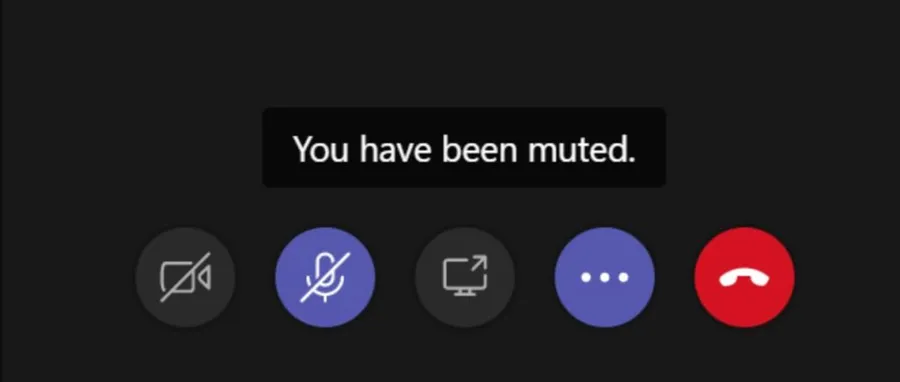
Other people will get a notification to know that they were muted. Please be aware of these notifications because you may think everyone hears you, but they can't, hence the "you're on mute."
If you're running a big meeting, you can go a step further and turn off "Allow mic for attendees" in the meeting options. People can't unmute themselves at all, and you open the microphone when they raise their hand. It's a strict approach, so I'd save it for webinars and large announcements, not for a team catch-up.
There's also a feature called "voice isolation" that I like a lot. You record a short voice profile, and then Teams filters out every voice that isn't yours. If you share an office, or someone is talking in the next room, this works much better than the generic noise suppression.
Control your surroundings
I wrote an article about this topic so that I won't go into much detail, but please be aware of your surroundings when you're on a call. If you can, warn people in your home that you're going to be on a call, and close the door.
Linked, not embedded. This page does not load YouTube, so it cannot track you here.
If you're using video, please note that you should be presentable and that other people can see your surroundings.
Linked, not embedded. This page does not load YouTube, so it cannot track you here.
(We need to laugh a bit)
Background blur and custom backgrounds help, but don't trust them completely. Microsoft says it plainly in the documentation: background effects "may not prevent sensitive information from being visible." A whiteboard, a document, or someone walking behind you can still show up for a moment. So be aware and control the situation. Don't let yourself be caught in these embarrassing moments.
Don't move too much
Connections are not always perfect, and if you move a lot, you'll look like a blur to everyone. It will be hard for people to focus on what you're saying if your image is delayed or have other things distracting them. It's better to disable the video than to have a choppy video. It's much less distracting.
If the problem is on your side, there's a better option than turning off your own camera. Under the "View" menu, you can turn off incoming video, which stops your machine from rendering everyone else's stream. You save bandwidth, your laptop stops working so hard, audio and screen sharing keep working, and nobody gets a notification about it. You can keep your camera on while your machine calms down.
Don't call from the car
Some people like to multitask and call from the car on the way somewhere. Since you're driving, you can't control the mute switch, so you're always "live." The car makes a lot of noise so that other people will be bombarded with constant distractions. Stop the car, pay attention, or don't participate.
Reduce the number of people
Online meetings are a lot harder, so reduce the number of people to the essential. Only invite the people that really have to be there. Managing online meetings is hard, and it gets exponentially harder if there's a lot of people trying to talk. Fewer people offer multiple advantages, but the best one is that you optimize everyone's time. You can always send an email around with the decisions and highlights of the meeting.
The good news is that this is no longer a hard choice between inviting someone and leaving them uninformed. People can mark themselves as optional, or use the "Follow" option to decline the meeting and still get the recap afterwards. They stay in the loop without spending an hour of their day in a call they didn't need to be in.
Raise your hand
There's always a delay since your voice reaches everyone else, so it's quite common for people to start talking on top of each other. Raise your hand and have someone moderate the conversation.

(Courtesy of Microsoft)
Everyone will get a notification that you want to talk without the need to interrupt anyone.

(Courtesy of Microsoft)
I know it's a little bit cumbersome, but you'll let people finish their thoughts and won't have collisions when they are talking.

(Courtesy of Microsoft)
Teams keeps the hands in the order they were raised, so whoever is moderating can call on people in order. And if you only want to agree with something, a reaction does the job without taking the floor at all.
Bring an agenda
An agenda used to be a paragraph buried in the invitation that nobody read. Now, when you schedule a meeting, you can add an agenda that becomes a collaborative note. Everyone can edit it before, during, and after the meeting, and it stays in sync wherever you open it.
The part I like the most is that the tasks you assign in there flow into Microsoft Planner and Microsoft To Do. So the meeting doesn't end with a vague "someone will look into it." It ends with something in a list, with a name on it.
Record the meeting
Recording a meeting is an excellent way to save some people's time. I know this is controversial because there's a record of what you said, and that's bad if you said something stupid. But it saves a lot of time for other people. They can check what was said during the meeting when it's better for them and, during the meeting, they can do other more urgent tasks. Give people a choice to be or not in the meeting and let them optimize their time for best effort while being informed.
Two things have changed since I first wrote this. The first is that almost nobody sits through a sixty-minute recording anymore. Every recorded or transcribed meeting now gets a recap, with the transcript, the shared files, and, if you have the license for it, AI notes, action items, and markers for the moments where your name came up. That's a much better way to catch up than scrubbing through a video.
The second is that recordings don't live forever. They go to OneDrive or SharePoint and they expire by default, so if you're recording something that people will genuinely need next year, don't assume it will still be sitting there waiting for them.
Be clear about the AI in the room
This one didn't exist when I first wrote this article, and it's now the piece of etiquette I care about the most. If you turn on recording, transcription, or Copilot, say it out loud. Teams does show a notification, and your organization can even require everyone to explicitly agree before the meeting continues, but a notification is not the same thing as being told by a person.
As an organizer, you also get to choose how far this goes. Copilot can be off, on only during the meeting, or on during and after. The middle option is a polite default for a sensitive conversation: people get the assistant while they're talking, and nothing is kept afterwards. Pick it deliberately instead of leaving it on whatever the default happens to be.
Don't multitask
This is a given for everything you do, but don't be in a meeting answering emails while you're not talking. You don't optimize your time if you're doing two things at the same time. That's impossible. Either you're there, or you're not.
It's quite disrespectful for others that you're doing something else while others talk, and you won't be doing any of the tasks correctly. If you have an urgent matter, write on the chat to leave and do it. Don't ever interrupt a conversation telling everyone you're leaving. That breaks the flow of the conversation without any added value.
I know the recap makes this easier to get away with now. But "the AI will tell me what I missed" is not a great thing to be thinking while a colleague is talking to you.
Final Thoughts
I know that all of these are common sense, but many people still do all of these things. Please be respectful and optimize your online meetings. Microsoft Teams provides many amazing features to make the meetings a lot easier, but if you don't use them, you'll be wasting precious time.
Photo by Chris Montgomery on Unsplash



No comments yet
Be the first to share your thoughts on this article!